Gjirokastra sits about three hours south of Tirana Airport. It’s one of the most intact Ottoman towns left in the Balkans, a UNESCO World Heritage Site, and almost nobody outside Albania talks about it. This guide covers the seven things to do in Gjirokastra that are worth your time, plus practical tips for getting there and how long to stay.
Most visitors pass through as a day trip from Saranda or Tirana. That works, but you’ll leave feeling like you rushed it. A couple of nights lets the place settle in. The old bazaar looks different at 7am when the tourist coaches haven’t arrived yet.
1. Old Bazaar
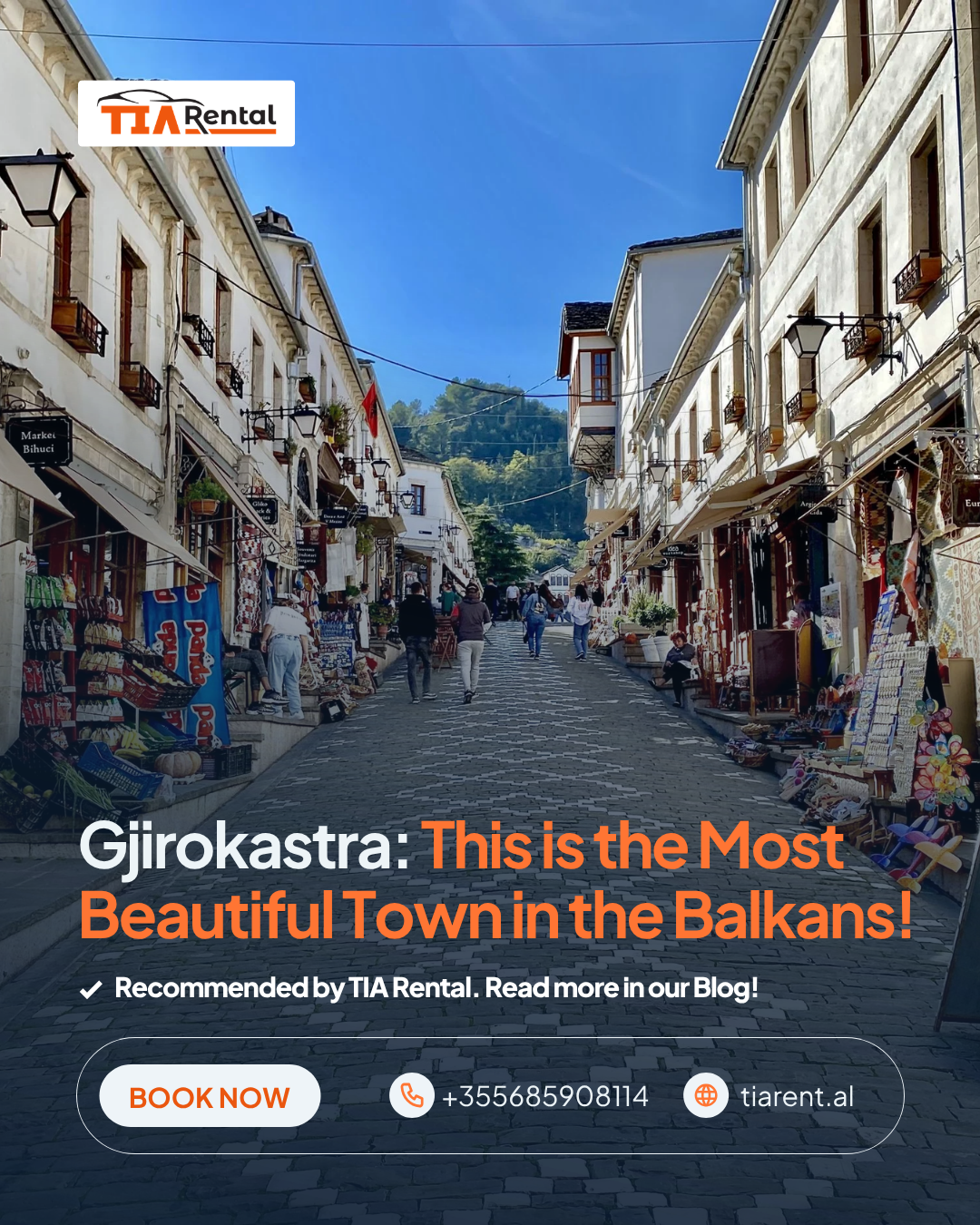
Start here. The bazaar is the oldest part of town, a network of cobblestone lanes lined with Ottoman-era stone buildings, craft shops, and small cafes. It’s photographable from almost every angle and genuinely pleasant to walk without a plan. The paving is uneven, so wear shoes with grip.
The cafes along the main lane are good for a coffee and a slow morning before the day warms up. By midday in summer, the stone lanes trap heat and the crowds pick up. Early is better.
2. Gjirokastra Castle
The castle sits above the old town and you can see it from almost everywhere in the valley. It’s one of the largest fortresses in the Balkans, built and expanded across several centuries of Byzantine, Ottoman, and later Albanian communist-era use.
Inside: a long artillery gallery running the length of the ramparts, a clock tower, and one of the stranger exhibits you’ll find in any European castle, a U.S. Air Force jet from the Cold War sitting in the courtyard. Albania shot it down in 1957 and kept it. The views from the walls over the valley and the old town below are worth the entry fee on their own.
Budget 90 minutes minimum. The castle is larger than it looks from below.
3. Zekate House
This is the best-preserved Ottoman tower house in the country. Built in the early 1800s, it’s still owned by descendants of the original family and open to visitors. The guest floor at the top is the part people remember. The woodwork, the bay windows, the proportions of the rooms, it gives you a real sense of what wealthy Albanian household life looked like two centuries ago.
Go with a guide if you can. The house makes more sense once someone walks you through what each room was used for and why it was built the way it was. The Gjirokasta Foundation publishes a useful orientation to the city’s architecture and history at
4. Cold War Tunnel
A secret 800-metre underground bunker built beneath the castle during the Enver Hoxha regime. It was designed to shelter government and military leadership in the event of a nuclear attack and stayed classified for decades after the regime collapsed. Now it’s a museum.
The tunnel is genuinely eerie. Low ceilings, stripped concrete walls, Cold War-era equipment still in place in parts of it. It documents the paranoia of that period better than any text could. Albania built over 170,000 concrete bunkers across the country during the Hoxha years. The Gjirokastra tunnel is the most accessible and most coherent explanation of why.
This and the castle together make a full morning. Do them back to back.
5. Traditional Food: Qifqi and Where to Eat it
Gjirokastra is the place in Albania to eat qifqi, baked rice balls seasoned with eggs and mint, a dish specific to this region. You won’t find it reliably anywhere else. Order it as a starter at any traditional restaurant in the old town.
Three restaurants worth knowing about: Odaja for the setting and the lamb dishes, Taverna Kuka for a more local crowd and simpler food at lower prices, and The Barrels outside town, set in a vineyard, which works well for a long dinner if you have a car to get back.
6. Ali Pasha’s Bridge
The name is slightly misleading. This is a surviving section of a 19th-century aqueduct that once carried water up to the castle. It’s a well-preserved piece of Ottoman engineering and worth seeing if you have time, but it involves a 45-minute uphill walk from the castle to reach.
You can drive the first paved section if the walk doesn’t appeal. The aqueduct itself is not dramatically photogenic but the hillside setting and the view back over the valley make it worth the effort if you’re already planning an active morning.
7. The Obelisk Viewpoint
The Obelisk is a communist-era monument on a hill above the town. It’s not particularly interesting as an object, but the viewpoint around it is. Go at sunset. The light on the old town’s stone rooftops and the valley below is the best view in the city, and it’s free.
Drive up if you can. The walk from the old town takes about 25 minutes each way on a steep road. Coming down in fading light on uneven paving is not ideal.
Getting to Gjirokastra: Why You Need a Car
Gjirokastra is about 230 kilometres from Tirana, roughly three hours by car on the SH4 south. There are furgon connections from Tirana and Saranda, but they run on Albanian schedules, which means infrequent and unreliable in the off-season. With a car you can combine Gjirokastra with the Blue Eye spring, Berat, or the coastal route along the Riviera on the same trip. For full route planning across southern Albania, Albania’s official tourism portal has up-to-date information on road access and seasonal closures.
TIA Rental is 100 metres from Tirana Airport arrivals, family-owned since 2010, rated 4.9 across more than 600 reviews. No deposit and no credit card required. The team can set you up with the right car before your drive south.
Things to Do in Gjirokastra: Frequently Asked Questions
How long should I spend in Gjirokastra?
Two nights is the right amount for most visitors. One day covers the castle, the Cold War tunnel, and the old bazaar without rushing. A second day handles Zekate House, the food, and a longer walk at the viewpoint. Day trips from Saranda (one hour away) or Tirana (three hours) work but feel compressed.
Is Gjirokastra worth visiting?
Yes, and it’s consistently undervisited relative to its quality. The castle alone is worth a detour. Combined with the Cold War tunnel and the old town, it’s one of the strongest single-day or two-day destinations in the country.
Is Gjirokastra easy to walk around?
The old town and bazaar are walkable but steep. The castle, Zekate House, and the bazaar are all within walking distance of each other, though the terrain is uneven and the climbs are significant. For anything outside the old town core, including Ali Pasha’s Bridge or the Obelisk viewpoint, a car saves a lot of effort.
What is Gjirokastra known for?
It’s a UNESCO World Heritage city known for its Ottoman-era stone architecture, the medieval castle, and as the birthplace of Enver Hoxha, the communist dictator who ruled Albania from 1944 to 1985. It’s also where the novelist Ismail Kadare was born. The food, specifically the qifqi, is a further regional draw.
Driving to Gjirokastra from Tirana? Pick up your car at TIA Rental, 100 metres from Tirana Airport arrivals. Rated 4.9 by 600+ travellers. No deposit, no credit card required, unlimited kilometres. Book at tiarent.al or call +355 68 59 08 114.